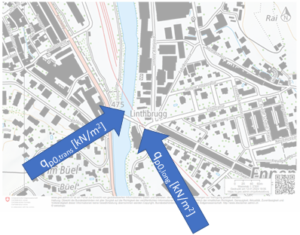

Matrisk analyzed the wind loads on the Linth Bridge in Ennenda for SBB and developed a data-based model for a realistic assessment of the effects on the supporting structure.
The project's starting point was the observation that existing standard approaches, which conservatively represent actual wind loads, are inadequate. The aim was therefore a more precise and economical assessment of wind stress. At the same time, the project sought to establish the foundations for targeted reinforcement and maintenance measures.
The focus was on the evaluation of long-term measurement data from a nearby MeteoSwiss station. Matrisk analyzed over 40 years of wind data and derived statistical models for extreme events. The model systematically considered wind direction as well as location-specific factors such as air density and topography.
Building on this, Matrisk developed a probabilistic model for determining characteristic wind pressures. This model combines extreme value statistics with physical relationships and enables a differentiated assessment of the load in the longitudinal and transverse directions of the bridge.
The results show that a direction-dependent analysis provides a significantly more precise representation of the risk and simultaneously offers considerable potential for reduction compared to normative approaches. In some cases, the relevant wind loads could be significantly reduced without compromising safety.
The project provides a reliable basis for both the risk-based assessment of existing structures and for the standards-compliant recalculation, and supports infrastructure operators in implementing measures in a targeted, economical and safe manner.